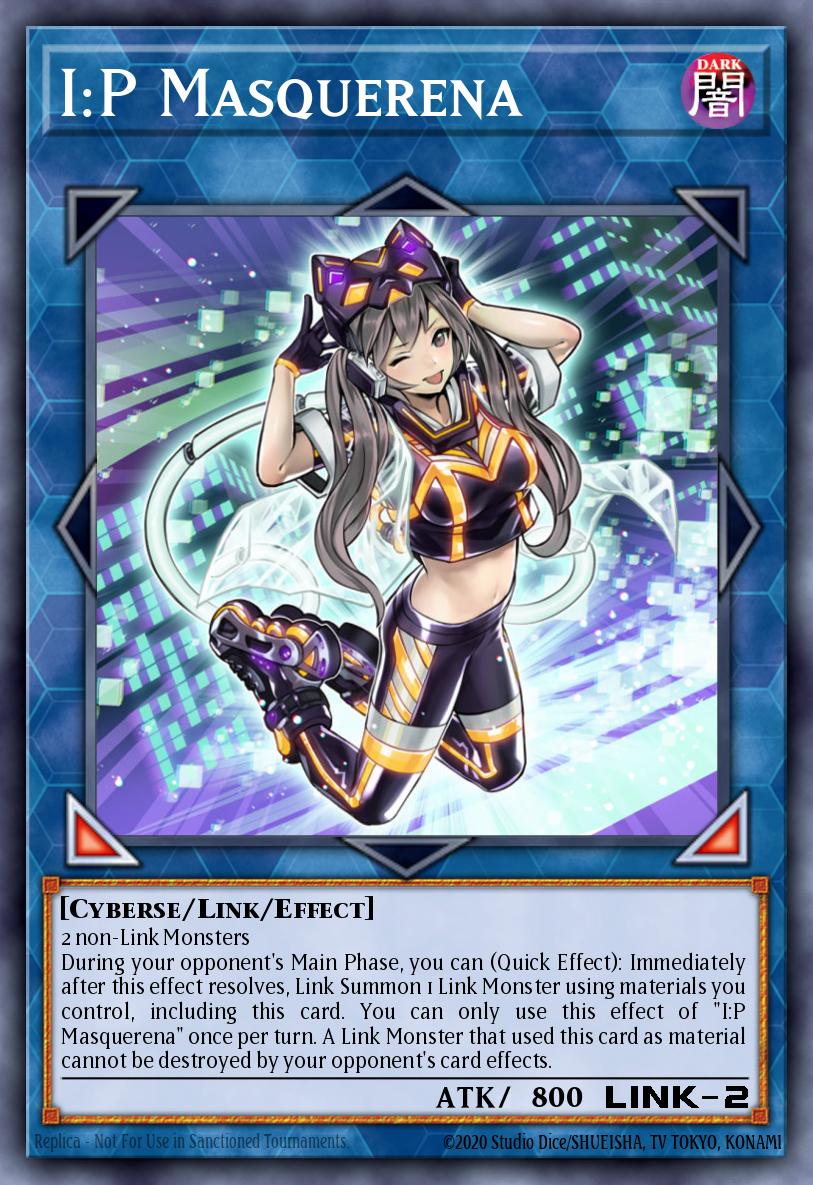
1. Keep two Effect Monsters available for S:P
I:P Masquerena takes two non-Link monsters for its own Link Summon. During the opponent’s Main Phase, its Quick Effect can Link Summon using itself and monsters you control. S:P Little Knight needs two Effect Monsters. Count I:P as one for the Link-2 and keep another eligible Effect Monster available.
2. Finish the Chain before using S:P’s summon effect
Suppose the opponent has Chain Link 1 and you chain I:P at Link 2. If it resolves, make S:P from legal materials and finish the original Chain. Then look for S:P’s Link Summon effect in a new Chain. Since I:P was a Link material, that effect can target a card on the field or in either Graveyard.
| Step | What to check |
|---|---|
| I:P activates | Opponent’s Main Phase and legal materials |
| S:P is Link Summoned | Finish the current Chain |
| A new trigger window opens | Choose one field or Graveyard target if eligible |
3. Choose your own monster for the temporary banish
When the opponent activates a later card or effect, S:P can target two face-up monsters, including one you control. If it resolves successfully, both are banished until the End Phase. Pick the legal pair with your remaining board and follow-up in mind.
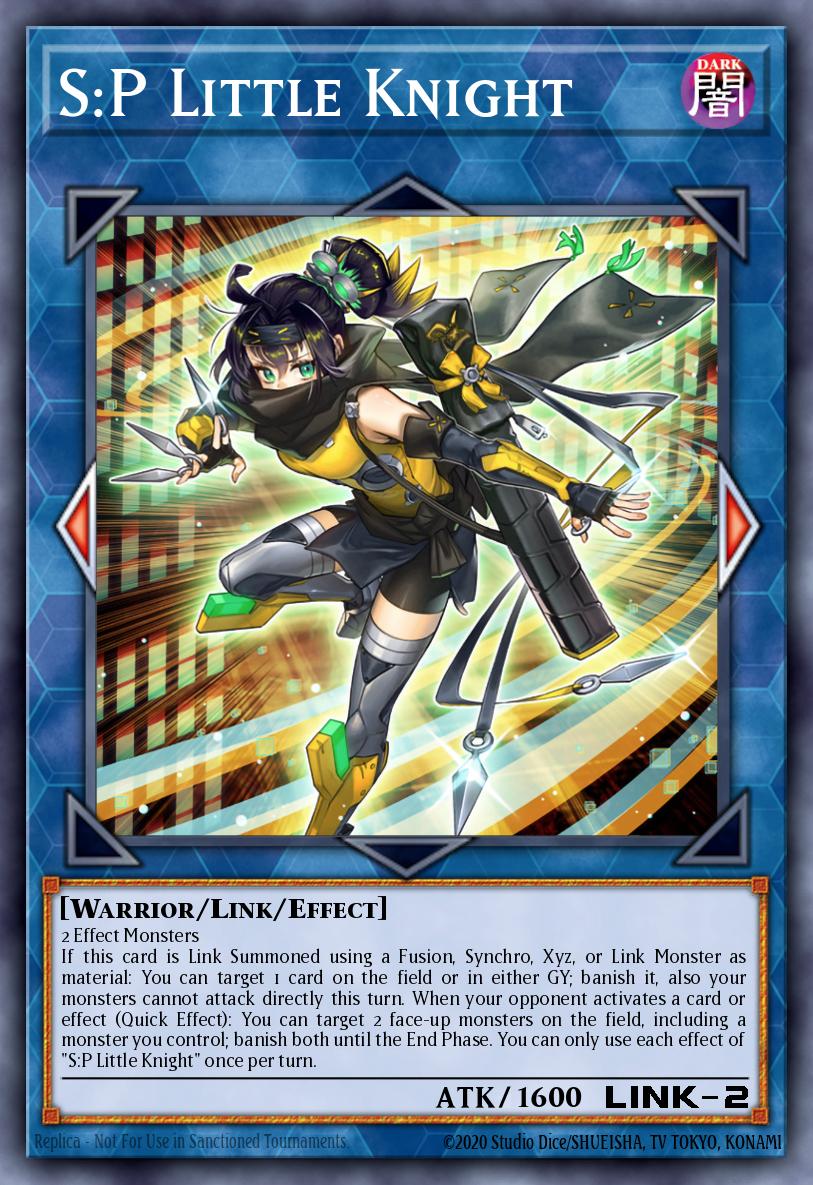
4. Account for I:P’s protection and S:P’s attack limit
A Link Monster using I:P as material gains protection from destruction by opposing card effects. Read the opponent’s card for other ways it could remove S:P. If you use S:P’s summon banish on your own turn, your monsters cannot attack directly that turn. Check lethal damage with that limit in place.
5. Recheck both materials when the opponent responds
In a replay, mark the monster you saved for I:P and what can be removed before its effect resolves. Link Rating 2 on I:P still leaves S:P needing two actual Effect Monsters. If its partner leaves, recheck the summon. When S:P arrives, plan the on-summon target and see which temporary banish window remains.